
One operating system for the full securitization lifecycle.
From cross-core data normalization to rated-bond placement, Keystone OS runs every step of multi-seller securitization on a single platform.
Five surfaces. One operating system.
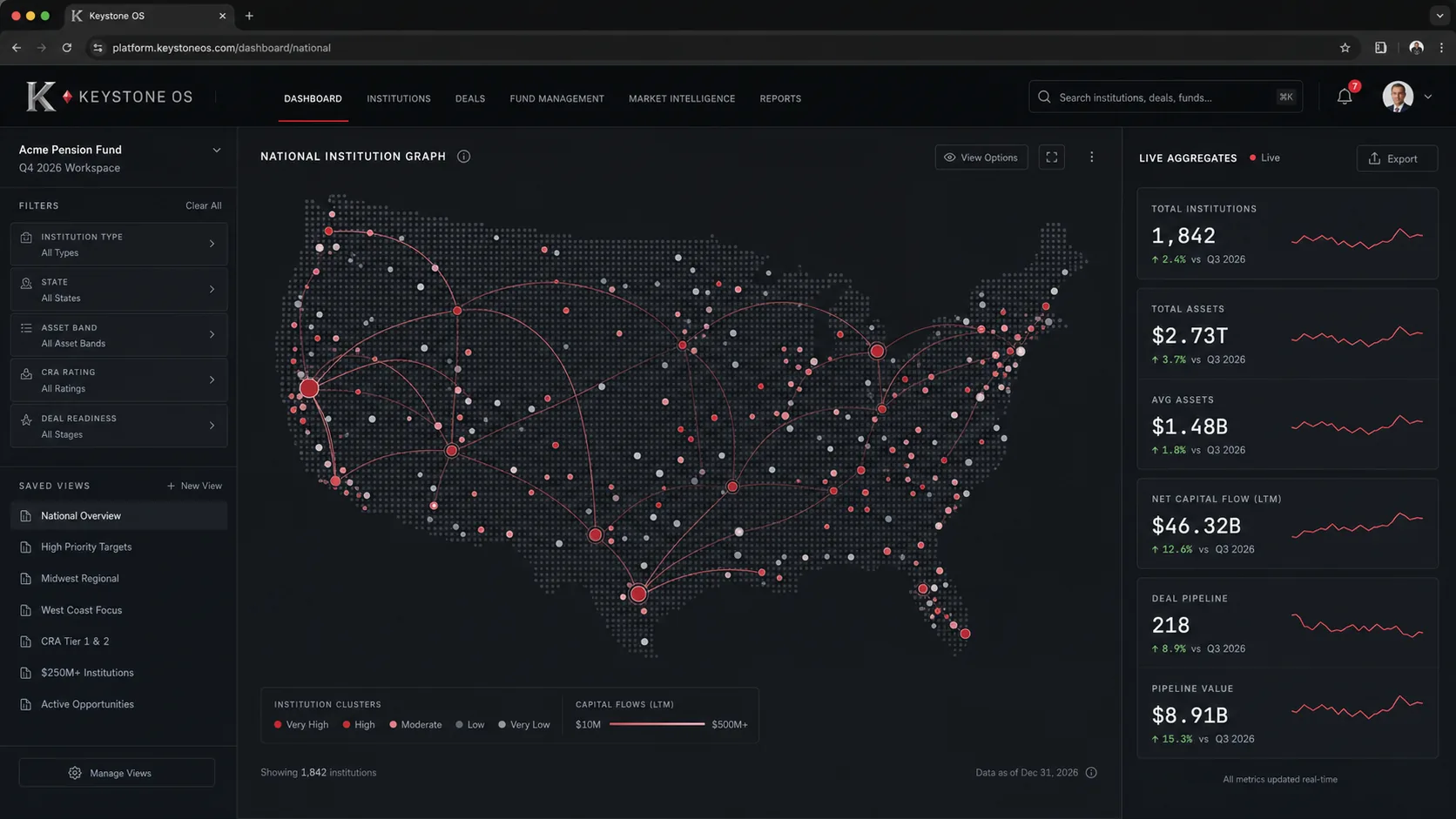
National Dashboard
Every community institution in one map. Every loan tape in one schema.
The entry point for issuers, investors, and analysts. The U.S. map renders 6,000+ institutions as nodes, colored by type and sized by total assets. Filters surface peer sets; a live aggregate panel surfaces normalized loan volume, pool composition time, and deals in flight.
Issuer filters to a peer set, identifies five candidate co-pool partners, and exports a starter pool definition into the Pool Composer.
No competitor has a national institution graph. The data network effect compounds from day one.
Institution Profile
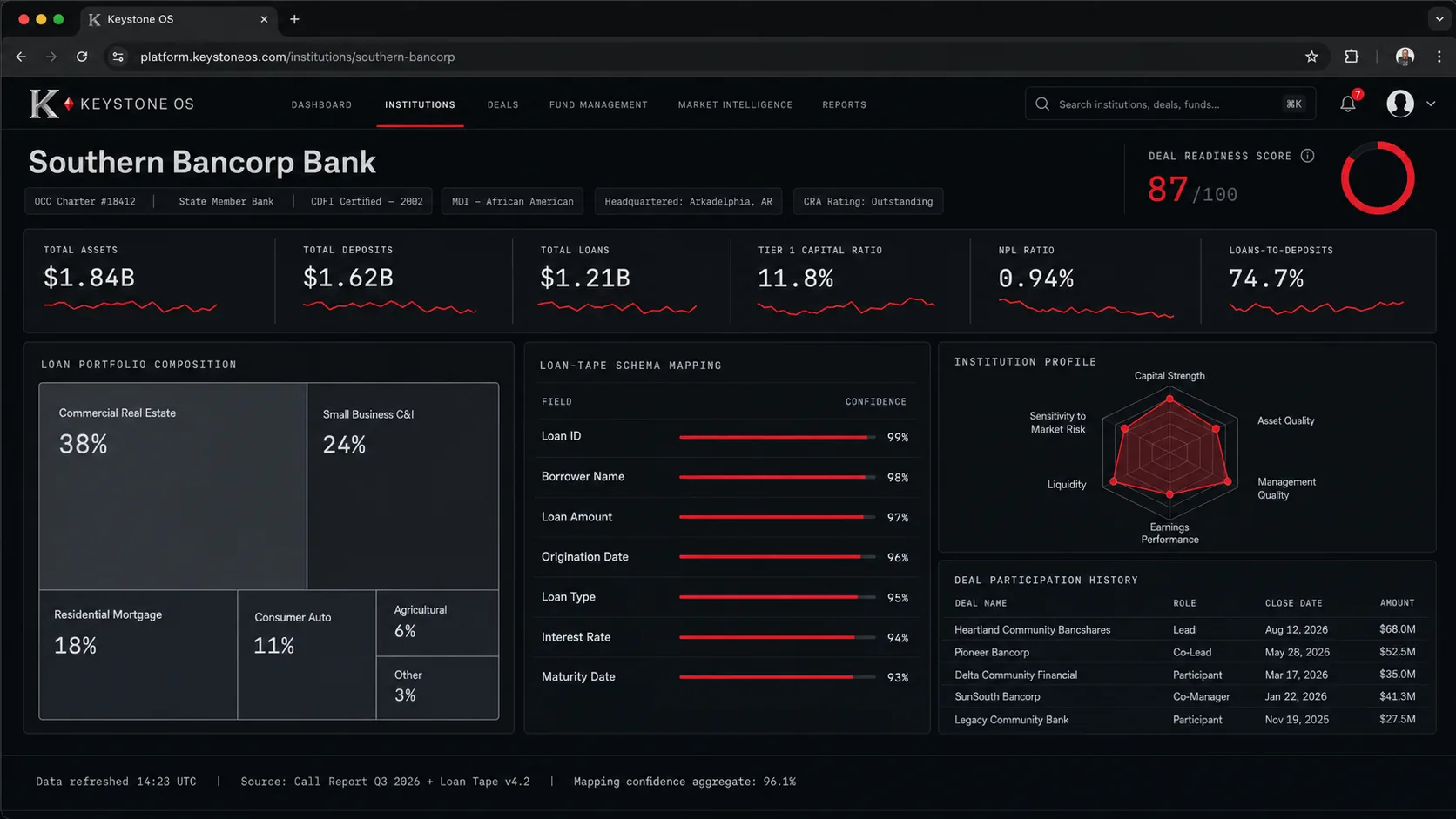
Every bank, MDI, and CDFI, modeled as a first-class object.
The canonical view of one institution: charter, regulator, assets, capital ratios, CRA rating, and certification status — plus a loan-tape preview mapped into Keystone's canonical schema with a confidence score per field.
Analyst reviews schema mapping confidence, approves low-confidence flags raised by the AI, and signs the institution off as deal-ready.
This is the moat. Once an institution is mapped, it stays mapped — every addition multiplies the value of the graph.
AI Intelligence Center
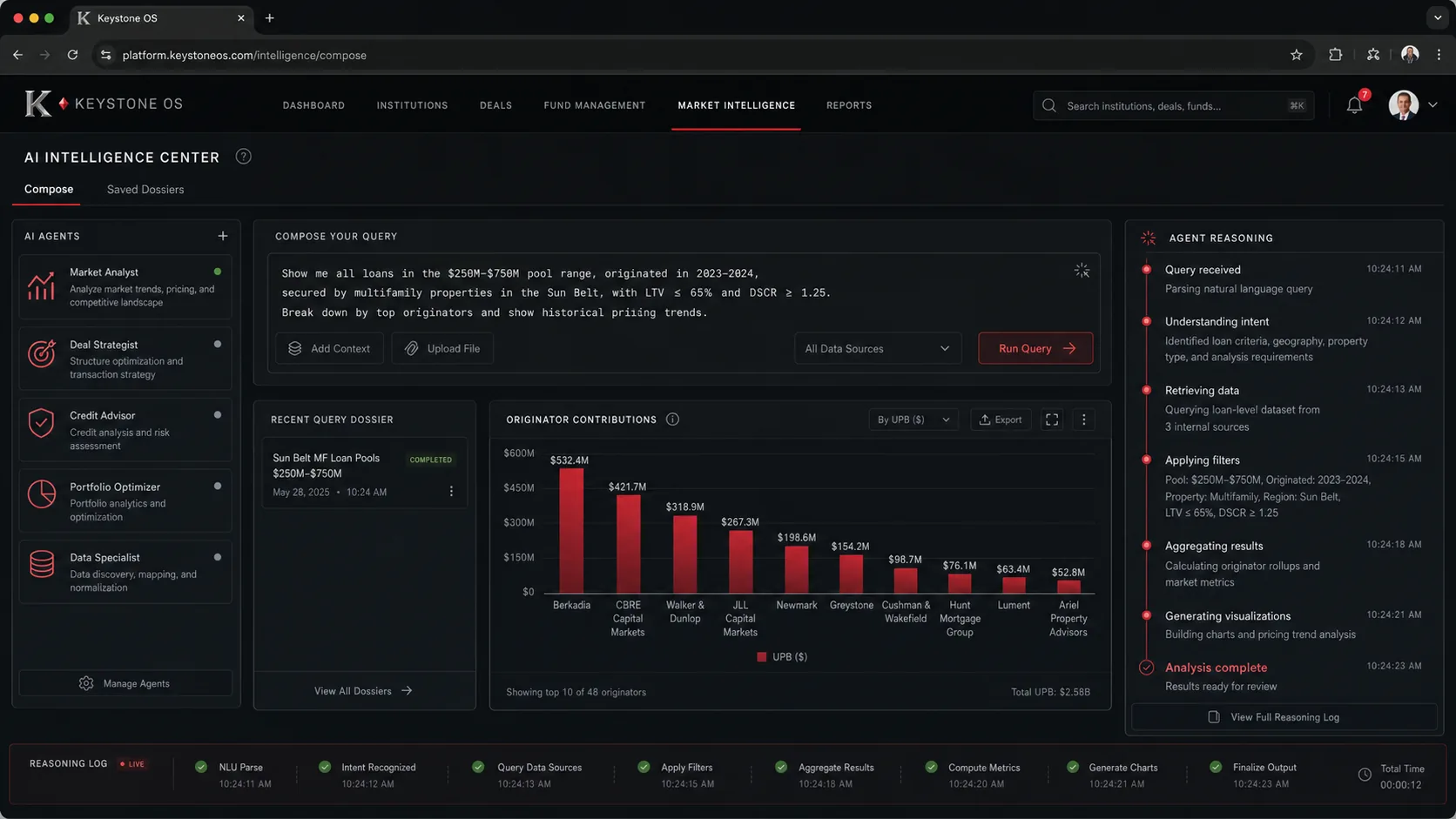
Six agents. One coordinator. End-to-end deal composition.
The operator's console. A horizontal agent rail shows Originate, Underwrite, Pool, Structure, Place, and Reinvest with live status. A natural-language query bar drives a workspace canvas; the right rail streams SHAP-style reasoning traces in real time.
Operator requests a $50M auto-loan pool from Southeast CDFI originators with no single-bank concentration above 20%. Agents return a candidate pool in under 60 seconds.
The category nobody else has built: AI-native securitization at the community bank tier.
Capital Match Engine
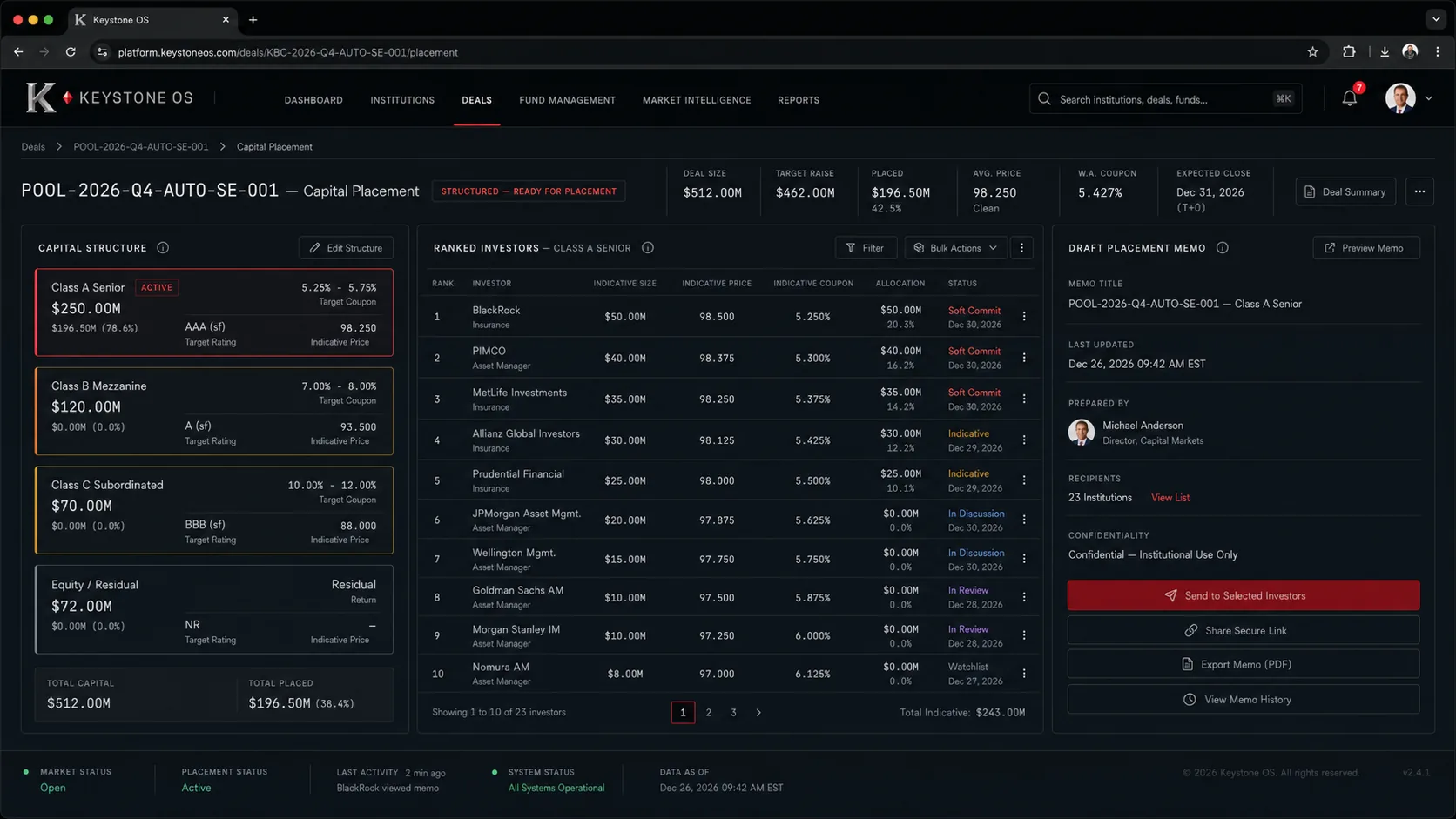
Match every tranche to its right investor.
Sits between Structure and Place. Once a tranche stack exists, the engine ranks every CRA-motivated bank, pension, insurance, and impact fund against tranche characteristics, then drafts a placement memo for the top match.
Operator picks Tranche A, sees the top 12 ranked investors, selects three to approach, triggers draft placement memos, and sends.
The CRA Modernization Rule created the demand. This is the engine that routes it.
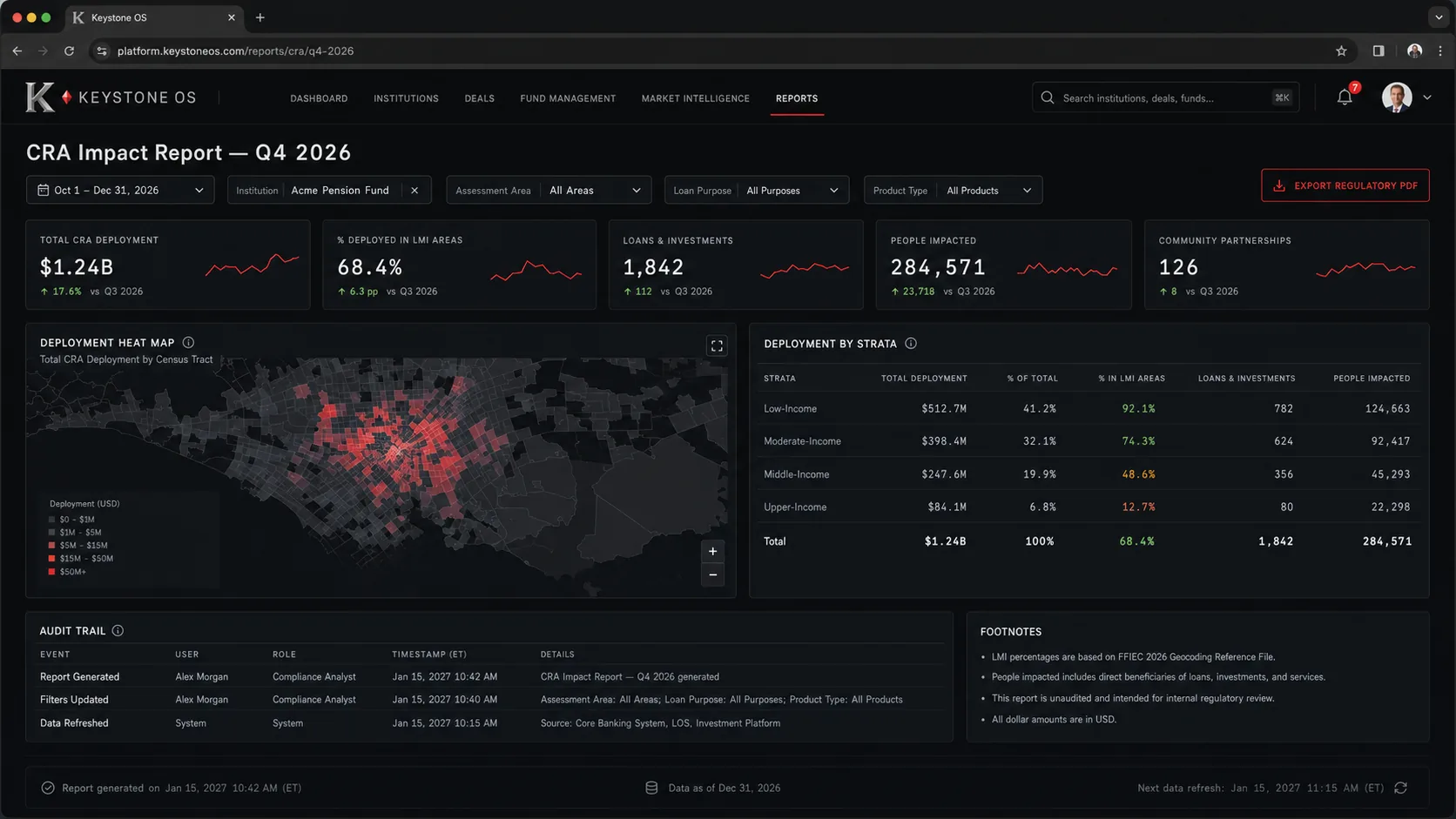
Impact Reporting
Every dollar attributed. Every beneficiary measured.
Closes the loop. Every underlying loan carries originator type, geography, demographic indicators, and sector. Deployment renders by state, by census-tract LMI status, and by borrower type — in regulatory format.
A reporting officer pulls the Q3 CRA report; it renders in under five seconds with a full audit trail.
Without impact attribution there is no CRA premium. Without the CRA premium the asset class never breaks out.
Six agents. One trust. One bond.
Originate
Ingests and normalizes loan tapes across bank cores
Underwrite
Scores loan-level eligibility with traceable attribution
Pool
Composes multi-seller pools to target concentration limits
Structure
Builds the tranche waterfall and credit enhancement
Place
Matches tranches to mandate-aligned investors
Reinvest
Recycles freed capacity back to originators
Built for the regulated environment from day one.
Role-based access control with audit logging on every state change
End-to-end encryption — TLS 1.3 in transit, AES-256 at rest
Immutable audit trails on every loan-level decision
SHAP-traceable underwriting decisions for rating agency review
SOC 2 Type II compliance pathway scoped, in progress
True-sale opinion architecture for SPV formation